They have been here for 150 million years.
    You have three days.
    Make them count.

    Galápagos Islands Expedition Travel
    Privately Curated by Nicci Grotefendt, CLIA Certified Cruise Counselor

    Begin the Conversation

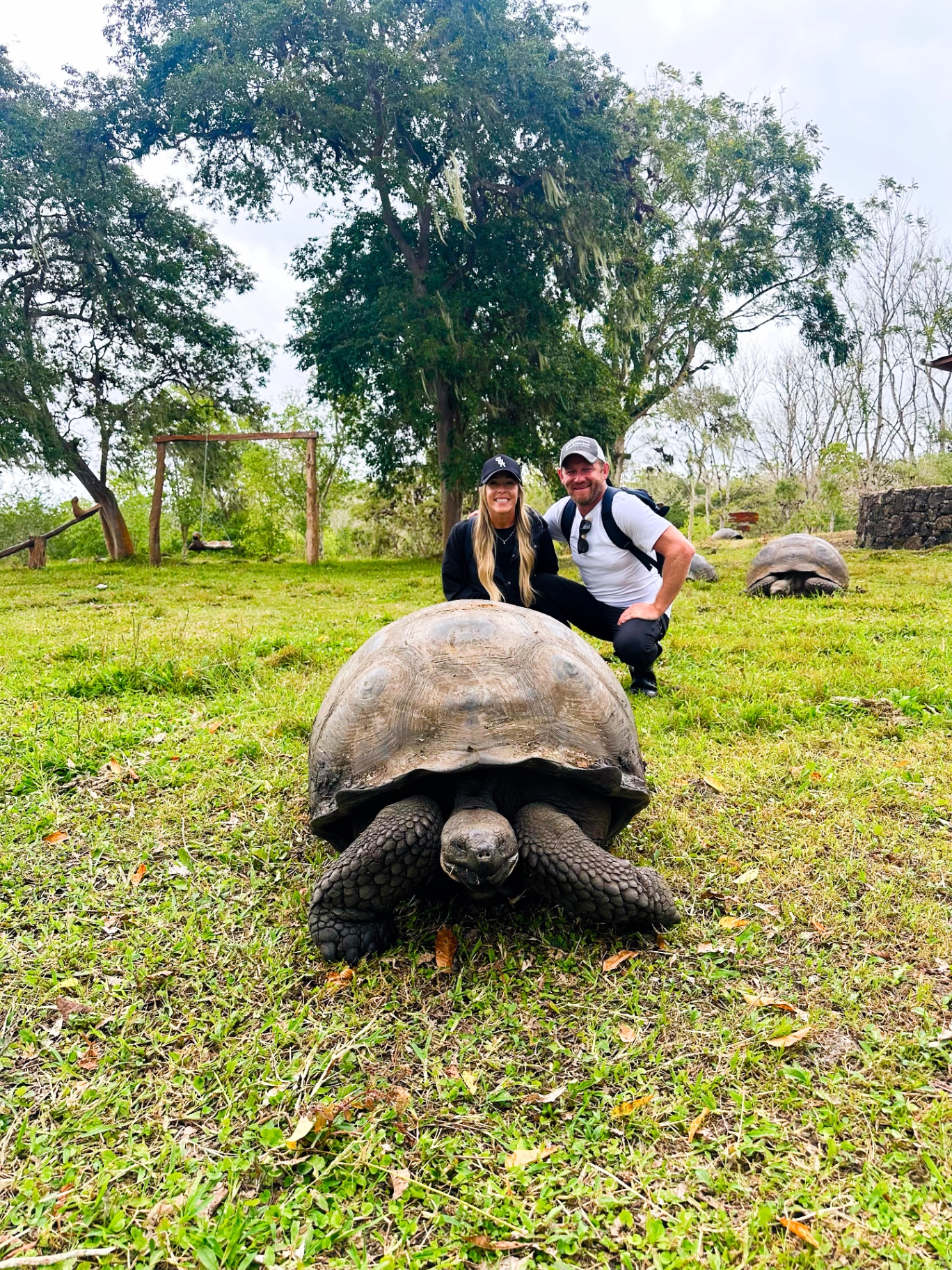
    The animals here did not evolve to fear you. They never needed to. When you kneel beside a giant tortoise on a volcanic hillside — when you watch it eat, slowly, three feet from your face, indifferent to your presence with the confidence of something that has been here for a hundred and fifty years — something shifts. You stop being a tourist. You become a witness. That is the difference between the Galápagos most people visit and the one I take my clients to.


    — Nicci Grotefendt  |  CLIA Certified Cruise Counselor  |  Travel GHR

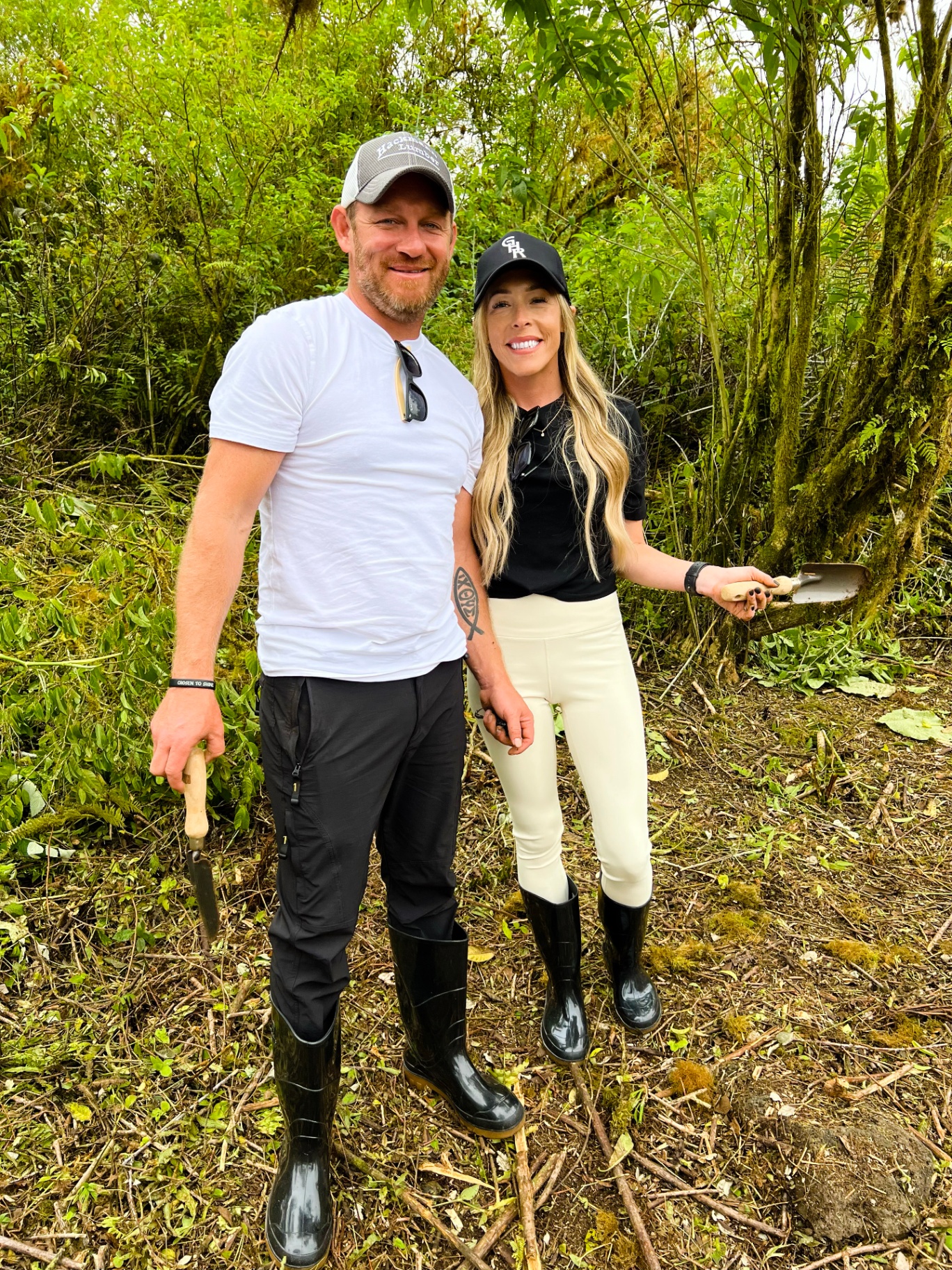
    Nicci Grotefendt and Tim Grotefendt planting Scalesia trees in the Galápagos highlands, Santa Cruz Island — personal expedition, Travel GHR

    Planting Scalesia trees in the Galápagos highlands — Nicci Grotefendt and Tim Grotefendt, Travel GHR

    PRIVATELY CURATED TRAVEL — WHAT IT MEANS IN PRACTICE

    I Was In That Room.
    That Is Why This Matters.

    Privately curated travel is not a tier of service. It is not a premium label a tour operator assigns to their best product. It is knowing, before your client arrives, that the hacienda in the Santa Cruz highlands hosts a traditional Ecuadorian cultural performance at their Friday lunches — and making sure your client is there on a Friday.

    This is the difference between an advisor who has researched the Galápagos and one who has been there. I have been there.

    The video playing beside this text was filmed during my personal expedition to the Galápagos Islands. I did not arrange it. I did not know it was coming. I sat down for lunch, and the performers arrived. That surprise — that specific unreplicable moment of cultural contact in an ecological wonder — is what I am describing when I say the words "privately curated."

    Tell me what you want to witness. I'll build the trip around it. →

    Santa Cruz Island, Galápagos — filmed by Nicci Grotefendt, Travel GHR

    ALL PHOTOGRAPHS BY NICCI GROTEFENDT — GALÁPAGOS EXPEDITION

    What the Galápagos Actually Looks Like

    From Someone Who Has Been There
    Giant Galápagos tortoises congregating in natural freshwater highland pool, Santa Cruz Island — photographed by Nicci Grotefendt, Travel GHR

    Animals That Have Never Learned to Fear You

    Giant Galápagos tortoises congregate in natural freshwater pools in the highlands of Santa Cruz. In the dry season, multiple animals share a single watering pool — occasionally alongside Galápagos pintail ducks, who share the water with the indifference of two creatures that have coexisted on these islands for millennia. You will stand at the edge of that pool. The tortoise will not look up.

    The View From Your Table

    In the highland farms of Santa Cruz Island, giant tortoises roam freely through the fields that border the working haciendas. You can sit at a covered outdoor table — local coffee, volcanic landscape, morning mist — and watch several tortoises move across a green hillside without getting up from your chair. This is not an exhibit. This is Tuesday morning on a privately curated Galápagos itinerary.

    The Part That Doesn't Make It Into the Brochure

    The Galápagos are Ecuadorian. The people who live and work here carry centuries of Andean cultural tradition onto these volcanic islands. Privately curated itineraries include hacienda lunches in the highlands where traditional Ecuadorian performers — costumed in the sanjuanito tradition — dance in open-air dining rooms surrounded by lava stone walls. Most Galápagos visitors never see this. The ones I send do.

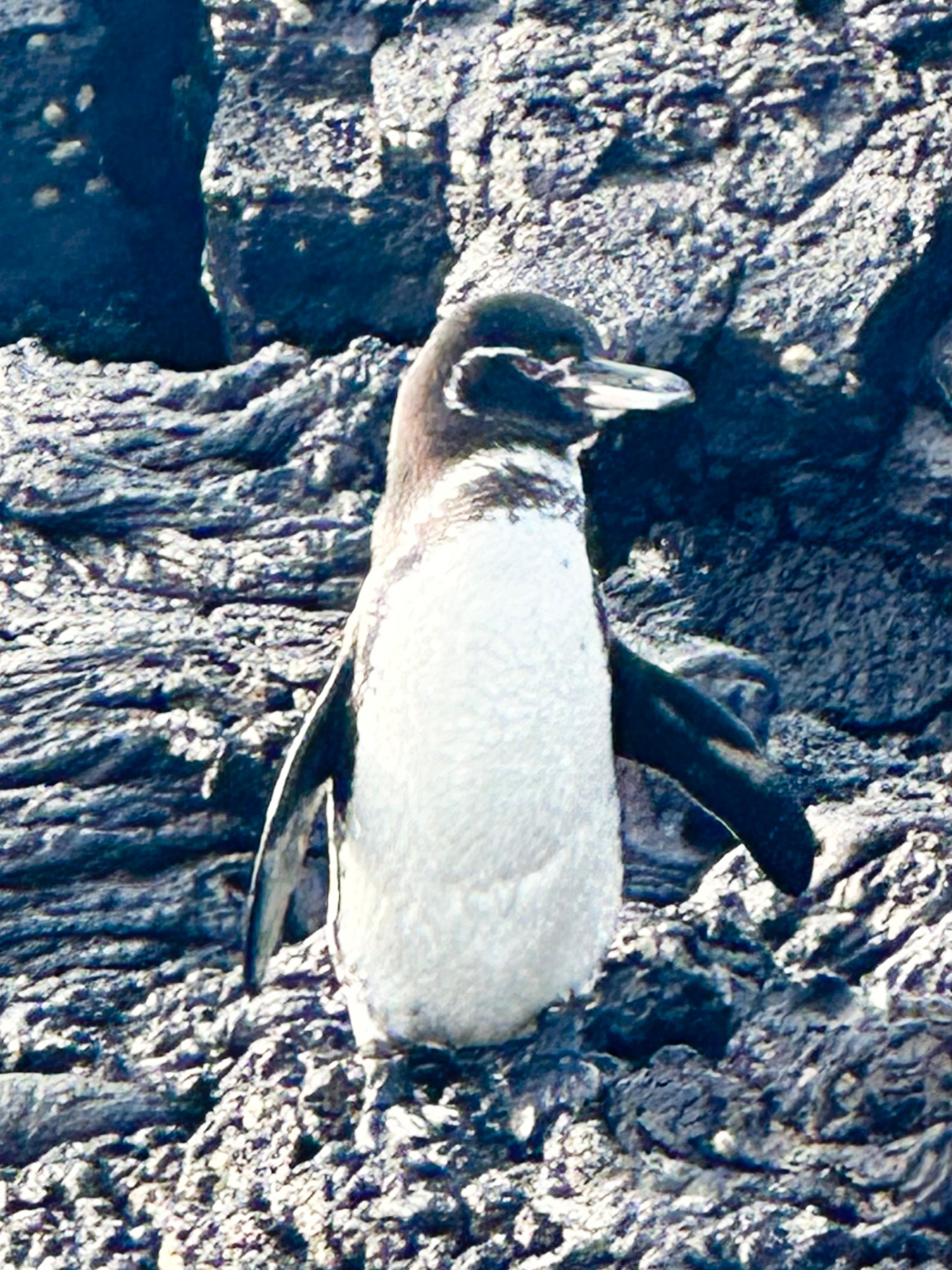
    Galápagos penguin on black lava rock — photographed by Nicci Grotefendt during personal expedition, Travel GHR

    The Penguin That Lives at the Equator

    The Galápagos penguin is the only penguin species found north of the equator — and the only one in the world that nests on lava. Standing on pahoehoe rock, indifferent to your presence, it is one of the most disorienting wildlife encounters on earth. Photographed by Nicci Grotefendt.

    The Crossing — Where the Expedition Begins

    The inter-island passages — by Zodiac, by panga, by expedition vessel — are where most visitors realize they have arrived somewhere genuinely different. Filmed by Nicci Grotefendt during her personal expedition.

    Wildlife That Sets Its Own Pace

    Nothing in the Galápagos moves for you. The animals operate on their own schedule — ancient, unhurried, completely indifferent to the cameras. That indifference is the experience. Filmed by Nicci Grotefendt.

    THEY HAVE BEEN HERE LONGER
    THAN ANY CIVILIZATION
    YOU HAVE EVER VISITED

    Galápagos penguin on pahoehoe lava coastline — photographed by Nicci Grotefendt during privately curated expedition, Travel GHR

    Galápagos penguin, lava coastline — photographed by Nicci Grotefendt

    FROM THE DESK OF NICCI GROTEFENDT — CLIA CERTIFIED CRUISE COUNSELOR

    What I Tell My Clients
    That No One Else Will


    The Charles Darwin Research Station is worth one hour. Not a full day.

    Every Galápagos itinerary mentions the Research Station because it is the most recognizable name on the island. It is a legitimate conservation facility, and the tortoises in the breeding program are worth seeing. But most itineraries allocate far too much time here and not enough time in the highlands, where wild tortoises move freely through farm fields and freshwater pools. If your itinerary gives you three hours at the Research Station and two hours in the highlands, your itinerary needs to be rebuilt.


    The crossing matters more than most people realize.

    The Galápagos inter-island crossings — done by Zodiac, by panga, or aboard the expedition vessel itself — are where the real expedition begins. The quality of your vessel's stabilization, the skill of the Zodiac drivers, and the naturalist guide's knowledge of what you are passing determine whether those crossings feel like transportation or like the adventure itself. I have been on both kinds. I will only send you on the second kind.


    A 16-passenger vessel and a 100-passenger vessel are not the same experience at a different price point.

    They are categorically different trips. The 16-passenger vessel lands at sites that are permit-restricted to smaller groups. It anchors in coves that larger vessels cannot enter. It operates at a pace set by the wildlife, not by a cruise director's schedule. The 100-passenger vessel delivers a comfortable, expert-guided experience — but it is not interchangeable. The question I always ask my clients is: what does intimacy with this place mean to you?
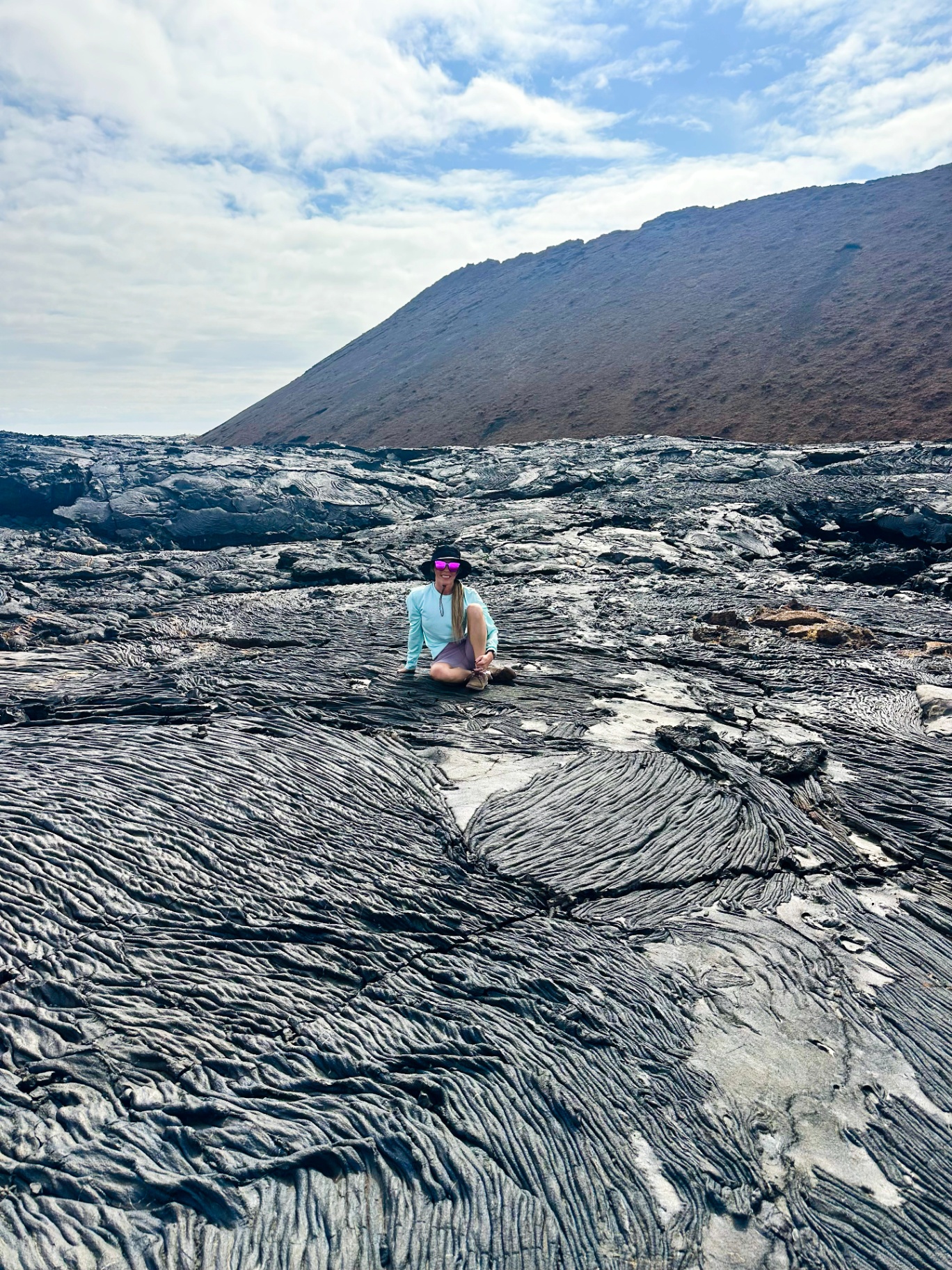
    Nicci Grotefendt on the pahoehoe lava fields, Galápagos Islands — terrain most itineraries never reach, Travel GHR

    Nicci on the pahoehoe lava fields — the terrain most Galápagos itineraries never reach. Photographed during her personal expedition.


    The interior of Santa Cruz Island is the Galápagos most visitors never see.

    Most Galápagos itineraries concentrate on the coastline — the marine iguanas, the lava herons, the sea lion colonies on the pier. The highland farms, the tortoise ranches, the misty scalesia forests, and the lava tubes that run beneath the island are equally extraordinary and far less crowded. I have watched tortoises move through green fields from a covered porch while drinking local Ecuadorian coffee. That is not an excursion. That is a morning.


    There is a cultural life here that the wildlife focus almost entirely obscures.

    The Galápagos Islands are populated by Ecuadorians who have built a genuine community on these volcanic rocks. Traditional Andean music and dance — carried from the mainland by settlers and their descendants — is performed at haciendas in the highlands in contexts that have nothing to do with tourism and everything to do with cultural pride. The privately curated itinerary I build will include at least one of these moments. Because I have been to one of them.

    What My Clients Ask Before They Book

    (And What I Actually Tell Them)

    The Galápagos Islands can be visited year-round, but the experience shifts dramatically by season. December through May brings warmer water, calmer seas, and the green season — lush vegetation, baby tortoises hatching, and ideal snorkeling visibility. June through November brings the garúa season: cooler, misty mornings, rougher crossings, and the arrival of whale sharks and hammerhead sharks in the northern islands. The most privately curated experience is found in the shoulder months — late November and early April — when group sizes are smaller and the wildlife is fully active. I always ask my clients what they most want to witness, then match the timing to that moment.
    For anyone who wants to experience the full archipelago — multiple islands, remote visitor sites, and the kind of wildlife encounters that aren't possible from a hotel on Santa Cruz — a small expedition cruise is the only answer. Land-based trips limit you geographically and fill your mornings with boat transfers rather than landings. A properly selected expedition vessel with 16 to 100 passengers delivers something fundamentally different: you wake up in a new anchorage every day, Zodiac-launched to beaches and lava shores before the day-trippers arrive. The difference between a 16-passenger expedition vessel and a 100-passenger ship matters less than people think — what matters is the naturalist guide-to-passenger ratio and whether the operator holds IAATO certification.
    Closer than you are prepared for. Giant tortoises do not move away from you. Marine iguanas do not move away from you. Sea lions may approach your snorkel fin out of curiosity. The reason for this is not that the animals are tame — it is that they have no evolutionary fear of humans, because humans arrived to these islands long after the animals had already developed their behavioral patterns. I have filmed a 150-year-old tortoise eating grass from three feet away. The animal did not look up. It simply continued being 150 years old. That moment, and the stillness required to receive it, is what the Galápagos actually is.
    The Galápagos National Park limits daily visitor numbers at every landing site. What is not limited is the quality of the experience within those rules. Mass tourism arrives by day-tripper ferry, follows a fixed route, and spends most of its time in proximity to other groups. Privately curated expedition travel means a smaller vessel, an expert naturalist with a low guide-to-guest ratio, landing sites timed to avoid overlap with other groups, and access to cultural experiences — like the traditional hacienda lunches with Ecuadorian dance performances in the highlands of Santa Cruz — that most visitors never encounter. The difference is the advisor who built the itinerary. I have been to the Galápagos. I know which operators earn that word 'privately curated' and which ones borrow it.
    The interior of Santa Cruz Island is a completely different world from the coast. Most visitors see the harbor, the tortoise reserve near the research station, and the lava tunnels. The highland farms — where giant tortoises roam freely through green fields that you can watch from a covered patio while drinking local coffee — are where I've had the most profound Galápagos moments. Tortoise behavior changes by island subspecies. The Charles Darwin Research Station is worth one hour, not a full day. The crossing between islands on a sailing expedition vessel at night, sleeping while the boat moves, waking in a new anchorage — that is not logistical. That is the whole point.
    Three things separate the right operator from the wrong one. First: IAATO or equivalent certification and strict adherence to Galápagos National Park regulations — this protects the wildlife and ensures your experience is contributing to conservation, not extracting from it. Second: naturalist guide credentials and the ratio of guides to passengers — the best vessels carry one certified naturalist for every eight guests. Third: vessel size and itinerary design — a 16-passenger vessel gives you a different experience than a 48-passenger vessel, and both give you something radically different from a 100-passenger ship. I am an Aurora Expeditions preferred partner and have vetted their Galápagos product personally. I will tell you when a different operator is a better match for your goals.
    The Galápagos Islands are Ecuadorian territory, and the human culture of the islands reflects centuries of Andean and coastal Ecuadorian tradition layered onto a volcanic archipelago that existed in isolation for millennia. In the highlands of Santa Cruz, privately curated itineraries include hacienda lunches where local cultural performers — dressed in traditional Andean costume — dance the sanjuanito and other regional dances in open-air dining rooms surrounded by lava stone and tropical vegetation. I have been to one of these lunches. The experience of watching traditional Ecuadorian culture performed in that specific ecological context — inside the UNESCO World Heritage archipelago — is something that does not exist in a tour operator brochure. It exists because someone knew to ask for it.

    Who I Trust With Your Galápagos Expedition

    I am an Aurora Expeditions preferred partner. I have vetted their Galápagos product. I will tell you when a different operator is a better match for your specific goals. That is what a privately curated approach means in practice.

    PREFERRED PARTNER

    Aurora Expeditions

    I have vetted their Galápagos product personally. Small expedition vessels with exceptional naturalist guides and a conservation-first ethos that matches how I build itineraries.

    VETTED PARTNER

    Lindblad Expeditions

    National Geographic-certified photo instructors and undersea specialists aboard every departure. The most education-forward expedition program in the Galápagos.

    VETTED PARTNER

    PONANT

    French-flagged expedition yachts that bring a refined hospitality standard to the Galápagos without diluting the expedition depth. For clients who want comfort and credentialed naturalists equally.

    Best Time to Visit

    Jan

    Hatching season begins, warmest water, peak snorkeling

    Feb

    Marine iguana nesting, warm seas, lush green islands

    Mar

    Hatching peak, warmest water temperatures, calm seas

    Apr

    Baby sea lions, transition season, green vegetation peak

    May

    Last warm month, blue-footed booby courtship begins

    Jun

    Garúa mist begins, whale shark aggregation starts

    Jul

    Whale sharks peak, rough crossings, dramatic skies

    Aug

    Peak marine activity, penguins active, humpback whales

    Sep

    Penguin breeding, marine iguana nesting, drier highlands

    Oct

    Fur seal pups, blue-footed booby nesting on Española

    Nov

    Shoulder month, smaller groups, wildlife fully active

    Dec

    Sea lion pup season, calm transition back to warm
    ■ WARM SEASON (Dec–May)■ COOL SEASON (Jun–Nov)
    Nicci Grotefendt beside a giant Galápagos tortoise in the Santa Cruz highlands — CLIA Certified Cruise Counselor, Aurora Expeditions preferred partner, Travel GHR

    Nicci Grotefendt

    CEO & Founder, Travel GHR | Privately Curated Expedition Travel

    Nicci Grotefendt is the founder of Travel GHR and one of a small number of travel advisors who has personally walked the lava fields of the Galápagos Islands, watched giant tortoises from three feet away, attended privately arranged cultural performances in the Santa Cruz highlands, and built itineraries for this destination from direct first-hand knowledge rather than supplier briefings.

    She holds CLIA Certified Cruise Counselor status — the highest professional certification available to cruise specialists — and is an Aurora Expeditions preferred partner, an AmaWaterways preferred partner, an ASTA Certified advisor, and a Travel Leaders Network member.

    Her approach to Galápagos expedition planning begins with one question: what do you most want to witness? The itinerary follows from the answer.

    CLIA Certified Cruise CounselorASTA CertifiedTravel Leaders Network MemberAurora Expeditions Preferred PartnerAmaWaterways Preferred Partner

    Tell Me What You Want to Witness.
    I Will Build the Rest.

    Every Galápagos expedition I curate begins with a conversation. Not a booking form. A conversation about what matters to you — what you want to feel, what you want to understand, who you want to become slightly different from having been there. If that sounds like your kind of trip, I am ready to talk.

    CLIA Certified Cruise Counselor·Personally experienced. Privately curated.

    +1-618-954-7979 (text preferred)  ·  nicci@travelghr.com