Five days from now, on April 22, a wave of cruise brands will post their Earth Day graphics. Most of those posts will be marketing. A few will be real.
I want to walk you through how I can tell the difference — because I read the sustainability data the way a hotel GM reads a P&L, line by line, and because one of the ships I have studied this year has done something most of the industry has not: shown the receipts.
The Insight: The Cruise Industry Has a Credibility Problem — and Earth Day Is About to Expose It
Sustainable expedition cruise travel has become one of the most misused phrases in luxury marketing. Big-ship brands promote carbon-offset programs, LNG fuel, and shore power hookups as if those three words equal sustainability. The independent record tells a different story.
The Dutch Advertising Board formally ruled that MSC Cruises' claim that LNG is a sustainable alternative, and that the company was on track for 2050 net-zero, was untrue and misleading. LNG is primarily methane — a greenhouse gas with more than 80 times the short-term climate impact of CO₂. Shore-power infrastructure is a headline item in most brochures, yet data from the Port of Southampton shows only about one in ten cruise ships has actually plugged in since the capability was made available in 2022. The Friends of the Earth cruise report card graded most major cruise lines at C+, D-, or F; only Hurtigruten earned an A.
That is the context Earth Day 2026 is walking into. And it is also why the Aurora Expeditions 2025 Impact Report, which was published in November, deserves more serious attention than it has received.
Why It Matters to You
If you are planning an Antarctic voyage, a Galápagos expedition, or an Arctic crossing this year or next, you are almost certainly telling yourself that the operator you choose should be responsible. The problem is that "responsible" has become a decorative word. The travelers I work with — who are building bucket-list trips they will not get a second shot at, or who are raising the next generation of travelers under the $84 trillion wealth transfer now underway — cannot afford to write a check to a brand that is performing conservation for a brochure.
Real sustainability in expedition travel has to clear four tests. One, does the operator publish measurable metrics with third-party verification, not claims? Two, is the ship itself engineered to reduce harm, not just labeled that way? Three, is the economic benefit of the voyage staying in the destination community? Four, is there a replenishment component — not just a "we emit less" component, but a "we actively regenerate" component? These are not high bars. They are minimum bars. Most of the cruise industry does not meet them. A handful do.
What Most People Miss: The Aurora Expeditions 2025 Impact Report, Read Line by Line
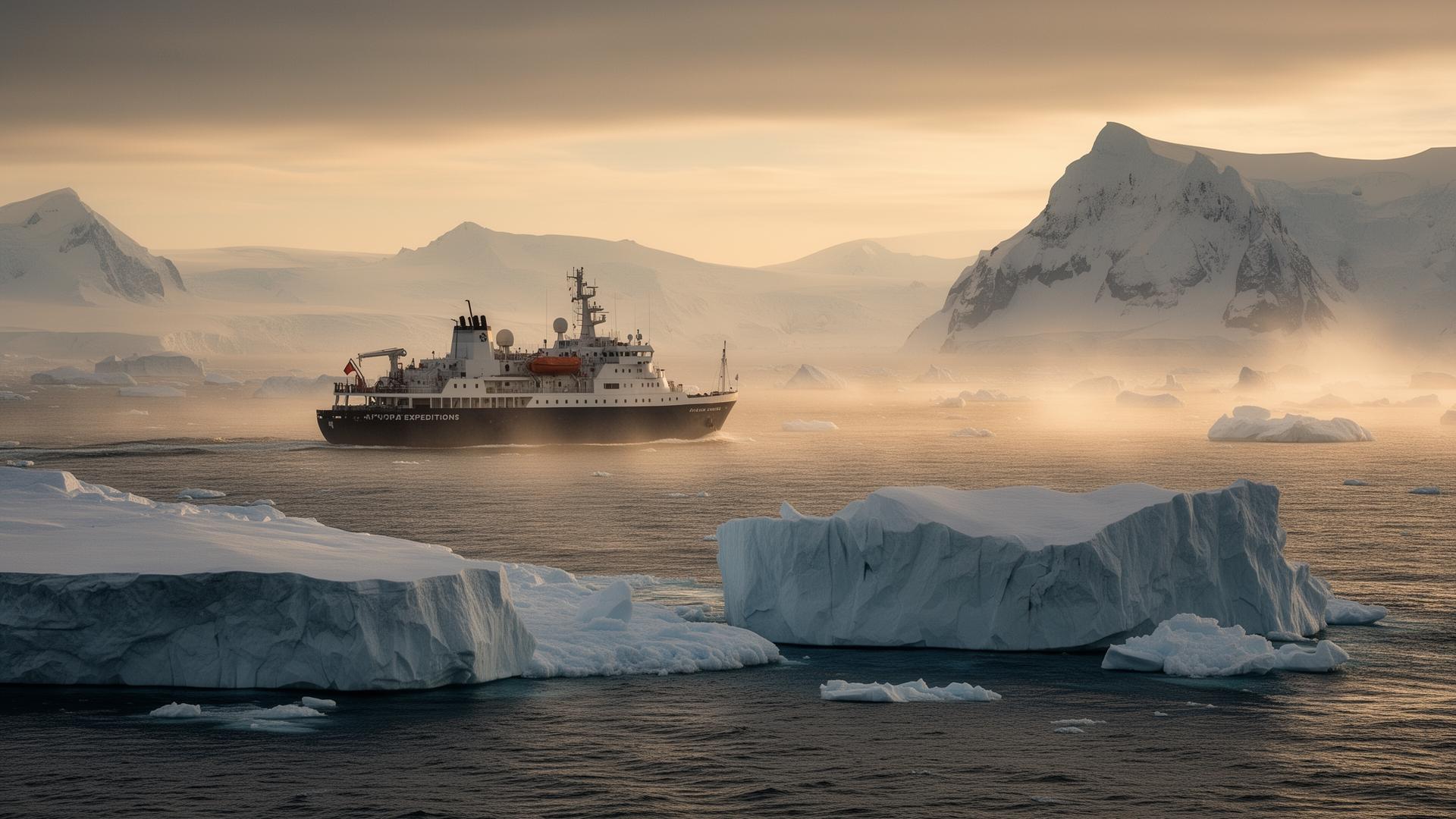
I have spent serious time studying the Aurora Expeditions fleet, itineraries, and operating philosophy. When their 2025 Impact Report landed in November, I did what I do with every supplier claim: I read the specifics. Here is what the document actually contains.
On ocean regeneration, not offsetting. Aurora has replaced traditional carbon-offset programs with a circular impact model. For every passenger, including staff and guests, the company funds the planting of one unit of marine life and the removal of one kilogram of ocean-bound waste. In 2025 that translated to 4,716 units of kelp, seagrass, and coral planted and 4,716 kilograms of plastic prevented from entering the ocean.
On fuel, not fuel marketing. In May 2025, the Sylvia Earle docked in Valencia, Spain, and became the first SunStone Infinity-class ship to run on 100% Hydrotreated Vegetable Oil — biofuel made entirely from used cooking oil. The emissions data from the trial showed a roughly 90% reduction in fuel-related greenhouse gas emissions compared to conventional marine fuel. Further trials are scheduled when the fleet returns to Europe in 2026.
On microplastics, which the industry mostly ignores. The Douglas Mawson, Aurora's third purpose-built expedition ship — named a TIME World's Greatest Place 2026 — carries microplastic filtration technology capturing up to 99% of laundry microfibres at the source, before they enter the ocean.
On education and community retention. Through a partnership with Upschool, more than 74,000 children across 195 countries have accessed free environmental courses filmed in Antarctica, the Arctic, and Iceland. Aurora's 2025 contribution to researchers totaled more than $364,000 of in-kind expedition support and an additional $140,000 in conservation donations.
On governance. Aurora is a certified B Corporation with an 87.5 B Impact Score — well above the global business average — and has committed to re-certification under the newest B Corp standards by 2027. Forty-five percent of senior leadership positions are held by women.
These are not aspirations. They are numbers on a page.
The Personal Layer: Why I Ask Every Supplier the Same Question
After years in hotel management — including a chapter running turnarounds for failing properties on behalf of banks and owners — I learned to read an operation from the inside out. The question I ask every destination I visit is the same one I ask every supplier: could I live here? Could I stand behind this?
When I traveled the Galápagos through Celebrity Cruises, I studied every landing site, every naturalist, every docking protocol — the way someone would study a hotel property they were about to invest in. It is the same lens I bring to Aurora. Reading the documentation is what lets me vouch for a ship. I will put my clients on an Aurora ship because I have read the receipts. I would not if I had not.
That is the difference between a travel advisor and a booking service. A booking service moves you onto a ship. An advisor reads the report first.
If you are planning an expedition voyage and you want the operator vetted this way before you book, that is the work I do. As Nicci Grotefendt, expedition travel specialist and founder of Travel GHR, I read the reports so my clients do not have to. If that resonates, I would love to help you design that journey.